
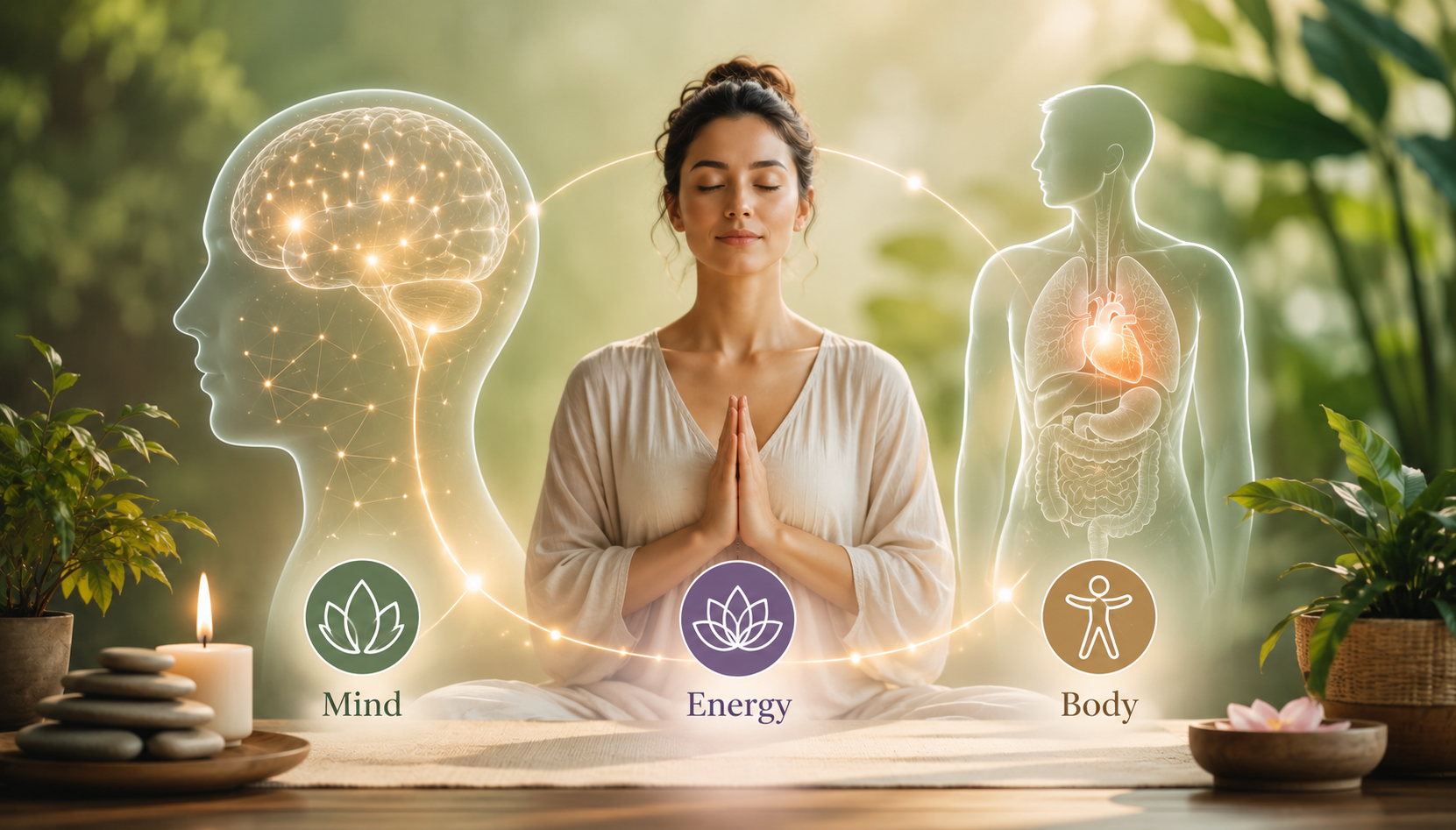
Anxiety is often experienced as a mental or emotional problem, but its effects can also be felt throughout the body. A racing heart, tense muscles, rapid breathing, stomach discomfort, sweating, restlessness, or difficulty sleeping can accompany anxious feelings.
This happens because the brain and body constantly communicate with each other. When the nervous system perceives a threat, the body can prepare itself to respond. Understanding this connection can help people develop a more complete approach to emotional wellbeing.
How Anxiety Can Affect the Body
When a person feels anxious, the body's stress response can become activated. This may lead to physical sensations such as increased heart rate, muscle tension, changes in breathing, sweating, or gastrointestinal discomfort.
These sensations can sometimes become a source of additional worry. For example, a person may notice their heartbeat becoming faster and interpret the sensation as something dangerous. That interpretation can increase fear, which may intensify the physical sensation and create a cycle of anxiety.
The Anxiety Sensation-Worry Cycle
A common pattern can look like this:
- A physical sensation appears.
- The sensation is interpreted as threatening.
- Anxiety increases.
- The body's stress response becomes stronger.
- The physical sensations become more noticeable.
- The person becomes even more concerned.
Understanding this cycle does not mean ignoring physical symptoms. New, severe, unusual, or concerning physical symptoms should be discussed with an appropriate healthcare professional.
Ways to Support a Calmer Mind and Body
Slow and Gentle Breathing
Paying attention to slow, comfortable breathing can help bring awareness back to the present moment. The goal is not to force the breath but to create a sense of steadiness and ease.
Relaxation and Gentle Movement
Stretching, walking, mindful movement, and other relaxing activities may help release physical tension and provide a healthy way to respond to stress.
Better Sleep Habits
Stress and poor sleep can influence one another. Maintaining a consistent sleep routine, reducing stimulating activities before bedtime, and creating a comfortable sleeping environment can support better rest.
Recognising Emotional Triggers
Physical sensations can sometimes become easier to understand when you identify the situations, thoughts, or emotions that occur before them. Keeping a simple record of triggers and responses may help reveal recurring patterns.
Why a Holistic Approach Can Be Helpful
Emotional wellbeing is influenced by thoughts, emotions, behaviour, physical sensations, relationships, lifestyle, and environment. Looking at these areas together can provide a broader understanding of what may be contributing to ongoing stress or anxiety.
Approaches such as counselling, psychotherapy, relaxation practices, mindfulness, and other evidence-informed interventions may be considered depending on an individual's needs. Some people may also explore complementary approaches, but these should not replace appropriate medical or mental healthcare when it is needed.
Conclusion
Your mind and body are constantly communicating. Becoming more aware of this relationship can help you recognise anxiety patterns without immediately becoming overwhelmed by them.
If anxiety or physical symptoms are persistent or interfering with daily life, professional guidance can help you understand the underlying concerns and identify appropriate ways to manage them.